
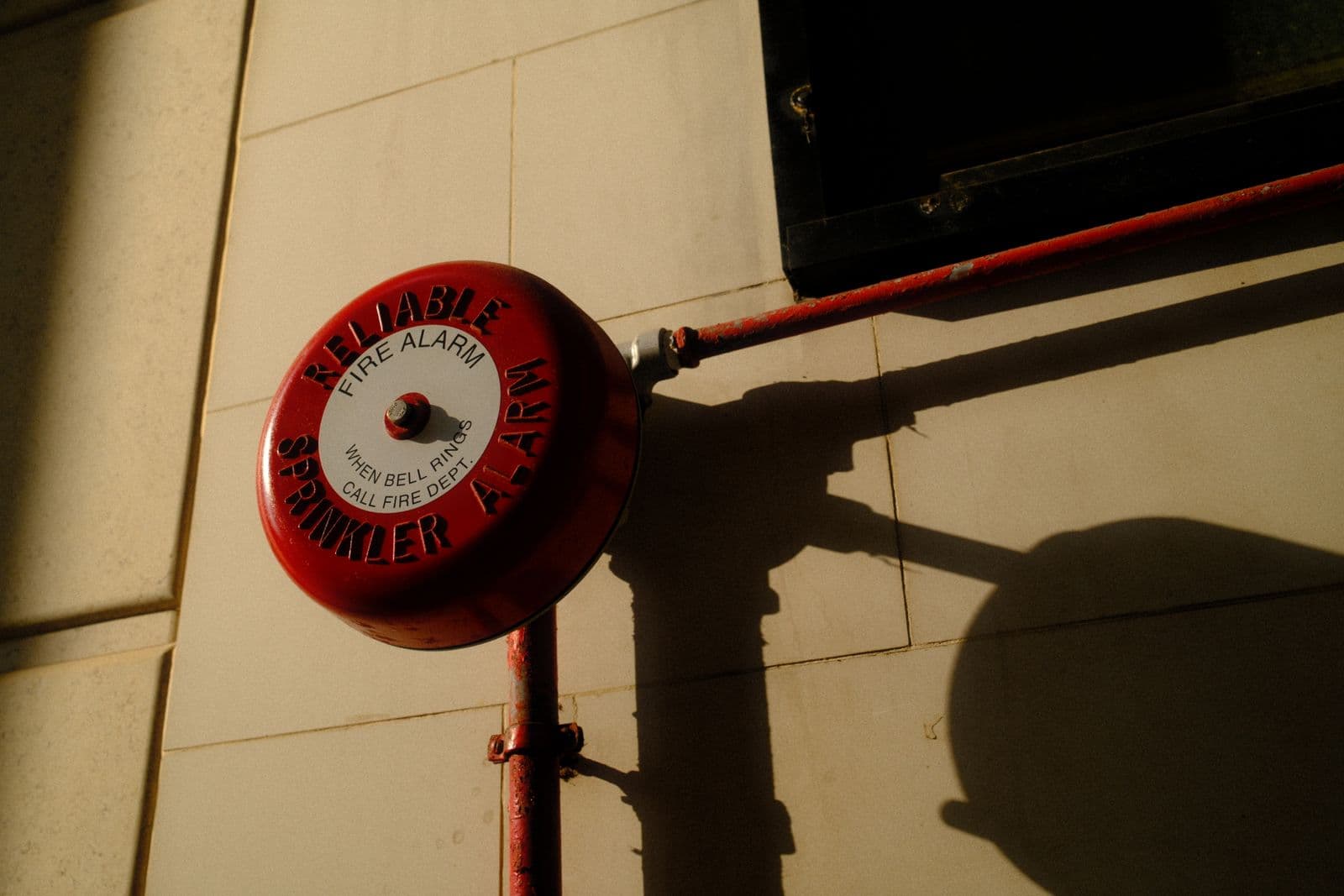
Fire Alarm Service & Repair for Commercial Buildings in Massachusetts & New Hampshire
R&D Life Safety Systems troubleshoots and repairs commercial fire alarm systems across Massachusetts and New Hampshire: trouble and supervisory conditions, failed devices, wiring faults, nuisance alarms, and water-damaged equipment. We diagnose before we replace anything: the panel’s event history, circuit readings, and the building itself tell us what actually failed, so you pay for a fix, not a parts lottery. And when a repair stops making financial sense, we tell you that too: in writing, with the reasoning.
When to call
Sound familiar?
- The panel shows a trouble or supervisory condition that keeps coming back no matter how many times it gets silenced.
- A ground fault appears after every hard rain, then clears on its own, which usually means moisture is getting into a conduit or junction box somewhere.
- A smoke detector, pull station, or horn strobe has failed, and the panel is telling you exactly which one, or worse, it isn’t.
- The building has had nuisance alarms: evacuations, annoyed tenants, and a fire department that is starting to ask questions about repeat responses.
- A roof leak, burst pipe, or sprinkler discharge got water into devices, conduit, or the panel itself.
- Your monitoring central station keeps calling about a trouble signal nobody on site can explain.
- Your current vendor has replaced the same part twice and the problem is still there.
Scope
What we service and repair
Included
- Troubleshooting of trouble, supervisory, and ground-fault conditions: finding the cause, not just clearing the display
- Repair or replacement of failed initiating and notification devices: smoke and heat detectors, pull stations, horn strobes, duct detectors
- Wiring fault diagnosis and repair: opens, shorts, and ground faults on signaling line, initiating, and notification circuits
- Nuisance alarm diagnosis and correction, including dirty or end-of-life detector heads and detectors mismatched to their environment
- Assessment and repair after water damage or physical damage to devices, wiring, or panels
- Battery, power supply, and communicator troubleshooting and replacement
- Correction of deficiencies written up on inspection reports, with documentation that closes the record
Not included (and who we coordinate with instead)
- Disabling devices or bypassing zones as a permanent “fix”. A nuisance alarm gets diagnosed and corrected, not silenced and forgotten
- Fire sprinkler piping and valve work (we service the fire alarm side: tamper and flow switch wiring and supervision, and coordinate with your sprinkler contractor on the rest)
- Engineering stamped designs where a repair grows into a modification that requires one. We work with your engineer of record
How it works
What happens when you call
- 1
Tell us what the panel says
Call 617-207-2777 and read us the display. The exact wording of the trouble or supervisory message, plus the panel make and model if you have it. A few minutes on the phone often narrows the problem before anyone rolls a truck, which means the technician arrives knowing what to bring.
- 2
Diagnose at the panel, not at the parts shelf
On site, we start with the panel’s event history, then work the affected circuit with a meter: isolating sections until the fault shows itself. Intermittent problems get treated as diagnosis problems, not as an excuse to swap boards until something changes.
- 3
Explain what we found before we fix it
You get the cause, the repair scope, and, where it matters. The honest comparison: repair this, or put the money toward replacing equipment that is at end of life or no longer supported by the manufacturer.
- 4
Make the repair and prove it
We repair with proper parts, test the affected devices and circuits, and verify signals through to your monitoring central station where applicable, so the fix is confirmed, not assumed.
- 5
Document and close out
You get a service record of what was found, what was done, and anything worth watching. The paperwork that answers your AHJ, your insurance carrier, or your regional manager without a second phone call.
Where this applies
Facility types we work in
- Office and commercial buildings
- Apartment and condominium buildings
- Municipal and public-housing buildings
- Schools, colleges, and universities
- Industrial and warehouse facilities
- Retail and mixed-use properties
- Healthcare and assisted-living occupancies
Systems & platforms
Our technicians have hands-on experience with commercial fire alarm platforms including Autocall, Notifier, Edwards/EST, Fire-Lite, Silent Knight, Farenhyt, and Simplex. We are happy to talk through your specific panel before we come out.
Compliance context
Codes, standards, and your AHJ
Repairs to a commercial fire alarm system fall under the state fire code, the NFPA standards adopted in your state, including NFPA 72, and the requirements of your local authority having jurisdiction (AHJ). Some AHJs and monitoring agreements also have notification requirements when a system is impaired or partially out of service. What applies to your building depends on its occupancy, its systems, and your AHJ, and we confirm those specifics as part of the work. Nothing on this page is a compliance determination for your property.
Why R&D
What working with us is like
Diagnosis before parts
A replaced board that didn’t fix the ground fault is money spent learning nothing. We work the fault to its cause: history log, meter readings, circuit isolation: before hardware gets ordered, because the cheapest repair is the one you only pay for once.
Repair-or-replace, answered honestly
If the panel is discontinued, parts are drying up, and every repair is a down payment on the next one, we say so and show the math. If a modest repair buys the system years of reliable service, we say that instead. Either way you get the reasoning in writing.
The service call starts with a conversation
When you call R&D you reach a person who will ask what the display says and what has already been tried, and if we miss the call, we call back. Triage on the phone is how the visit itself goes faster.
A record you can hand to your inspector
Every repair closes with documentation of the cause and the correction. When the fire inspector or insurance auditor asks what happened with that trouble condition from March, you have the answer on paper.
Questions
Frequently asked questions
The panel is beeping and showing a trouble condition. Can I just silence it?
Silencing the buzzer stops the noise. It does not fix anything. A trouble condition means the panel has detected a fault somewhere: a wiring problem, a failing battery, a communicator that can’t reach the central station, a device that stopped answering. Until the cause is corrected, part of your system may not perform when it is needed. Silence it if you must, write down exactly what the display says, and call us with that wording. It is the single most useful piece of information you can give us.
What is the difference between a trouble signal and a supervisory signal?
A trouble signal means something is wrong with the fire alarm system itself: wiring, power, batteries, a device, or communications. A supervisory signal means the system is reporting a condition on something it watches, most commonly the sprinkler system: a closed valve, low air pressure on a dry system, or a duct detector condition. Neither is a fire alarm, and neither should be ignored. A closed sprinkler valve in particular is worth taking seriously the day it appears.
The alarm keeps going off and there is no fire. What causes nuisance alarms?
The usual suspects: smoke detector heads that have accumulated years of dust, detectors installed where steam or cooking exhaust reaches them, construction dust from renovation work, insects, and devices that are simply past their service life. The fix is diagnosis: identifying which device activated and why, then cleaning, relocating, or replacing it. What we will not do is disconnect a detector and leave a hole in your coverage; that trades an annoyance for a real risk, and your AHJ will see it the same way.
Water got into part of my fire alarm system. Is it ruined?
It depends on what got wet and for how long, but the honest caution is this: corrosion does not stop when things dry out. Devices and connections that took water can test fine this week and fail next month. We assess what was in the wet zone: devices, wiring, junction boxes, sometimes the panel, and document what needs replacement now versus what can be verified and monitored, which also gives you a clean record for the insurance claim.
Can you repair a system that another company installed?
In most cases, yes. We troubleshoot and repair commercial systems from the major manufacturers regardless of who installed them. A small number of proprietary platforms restrict outside service, and we identify that up front rather than after you have committed. Give us the panel make and model when you call and we will tell you honestly whether we can support it.
The panel is in alarm right now: what should I do?
Fire, smoke, or anyone in danger? Call 911 now. System trouble, a panel in alarm or trouble, or an impaired system in an occupied building? That’s an urgent service call: phone us at 617-207-2777.
Coverage
Service area
We troubleshoot and repair commercial fire alarm systems across Massachusetts and New Hampshire. Call to confirm coverage for your specific site, and if the same trouble keeps surfacing across a portfolio of buildings, ask about multi-site service.
Related pages
Emergency Fire Alarm Service
Urgent service for commercial fire alarm panels in alarm or trouble across MA & NH. Fire or smoke? Call 911. System trouble? Call 617-207-2777.
Learn more →Fire Alarm Inspection & Testing
Code-required fire alarm inspection and testing with clear, complete reports for buildings across MA & NH. Call 617-207-2777. We answer, or we call back.
Learn more →Fire Alarm Monitoring
Central-station fire alarm monitoring, communicator upgrades, and monitored-account takeovers for buildings across MA & NH. Call 617-207-2777.
Learn more →Property Management
Fire alarm inspection, service, and monitoring for property management portfolios across MA & NH. One accountable vendor: call 617-207-2777.
Learn more →Multi-Site Facilities
One vendor for fire alarm inspection, service, and monitoring across your MA & NH sites. Consistent reports, consolidated scheduling. Call 617-207-2777.
Learn more →Service Call Preparation
What to have ready before you call a fire alarm company: panel make and model, the display message, documents, access, and monitoring info. Call 617-207-2777.
Learn more →Browse all services or contact us with a question.
Read us the panel display. We’ll take it from there
The exact wording of a trouble message tells an experienced technician a lot before anyone visits the site. Call 617-207-2777 with what the display says, or request service online, and we’ll tell you what makes sense next.